


How Hard Can It Be to Build Your Own Product in America?

An underwater light, a complicated supply chain, a few mysterious algorithms, and a cast-iron pot.

I have a cast-iron pot at home that I didn't buy.
A few years ago, I went camping in Tennessee and forgot to bring a cooking pot. A wonderful lady and her husband actually drove about 40 minutes to bring me one.
Forty minutes, for someone they'd met while camping.
I still have that pot. :)
On another camping trip, a Christian family of four drove half an hour to bring me a Chinese-language Bible.
These might sound like small things, but they meant a lot to me.
I grew up in China, where we were taught to work hard, rely on ourselves, mind our own business, and try not to trouble other people. Sometimes I joke that hard work is practically our religion.
So when strangers went out of their way to help me, I didn't quite know what to make of it at first.
Over time, I've learned to accept kindness without feeling that I must immediately repay it. I've also learned to spend more time helping others, and to enjoy doing it.
It turns out that making friends isn't quite as complicated or frightening as I once thought.
I mention this because lately, while trying to launch our own product in America, I've been thinking a lot about trust.
And about how strange our world has become.
First, You Have to Make the Thing
Our team loves water sports. Kayaking, paddleboarding, evenings on the lake, hanging out with friends — that's our idea of a good time.
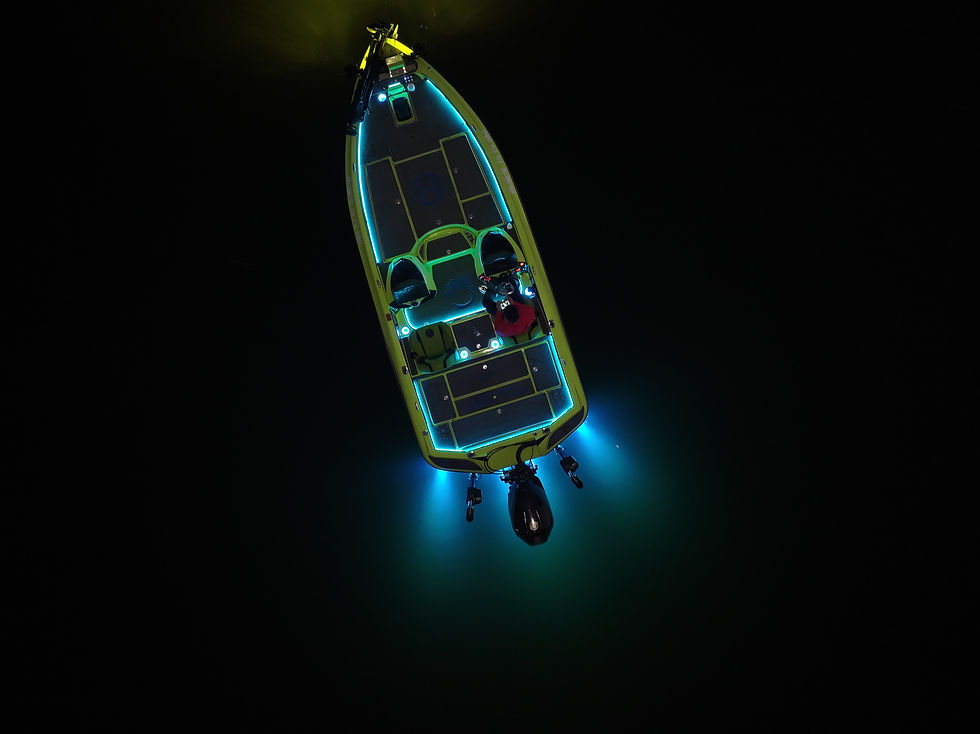
We wanted to make an underwater light that could add a little color to those experiences.
That's how GLOW270 started.
The design was the fun part. Turning it into a product we could actually sell was another story.
For the components and manufacturing capabilities we needed, we couldn't find a practical domestic supply chain that would work for a small company like ours.
So we started looking internationally.
Electronics from one supplier, waterproof components from another, batteries, custom parts, assembly, testing, shipping arrangements. Every step needed someone who could actually deliver what we needed.
Then came tariffs and international freight costs.
And battery transportation requirements. And certification paperwork.
If you've ever tried importing a product containing a lithium battery, you probably know what I'm talking about.
None of these problems is impossible to solve. But when you're a tiny company, you can't throw money at every problem. You have to figure things out yourself, and every mistake comes out of your own pocket.
I've seen videos of construction crews in China rebuilding an entire highway overpass overnight. That kind of coordination is incredible.
Meanwhile, we're trying to get a waterproof light and its battery into the same retail box, legally and economically.
Some days, I really miss that kind of industrial efficiency.
Everybody Wants a $50 Light. So Do We.
During our outreach, quite a few Facebook kayaking and paddleboarding group administrators told me that their members really wanted something in the $50–$100 range.
I believe them.
At $219, GLOW270 isn't a cheap accessory, and we're well aware of that.
Of course I'd love to sell a good product for $50. It would make my life a whole lot easier.
And yes, there are underwater LED lights available for less than $50. They light up, change colors, and may work perfectly well for their intended purposes.
But the less expensive options we tested didn't meet our requirements for waterproofing, durability, brightness, and color quality.
We weren't comfortable putting our name on them.
Does that make us perfectionists?
Not really.
I just don't want returns and replacements to bankrupt our little company. Haha.
Seriously, though, that's a very real concern.
We can't afford to sell something we don't trust and then hope the warranty claims won't be too bad.
So we chose to spend more on components and construction instead.
I'm sorry our product isn't cheaper. And I hope people understand that we aren't sitting on some enormous profit margin. A lot of what goes into the selling price goes straight back into making the product.
We're not claiming to have created the perfect underwater light.
We've simply tried to make something we would feel comfortable using ourselves and selling to friends.
Taking care of customers is important. But so is keeping our own conscience clear.
And keeping the business alive would be nice too.
Now, If Only We Could Tell People About It
Making the product is only half the challenge.
Selling something nobody has heard of, especially when people are watching their spending, is another matter entirely.
I completely understand why consumers are suspicious of a new brand. The internet is full of scams, fake reviews, and advertisements that promise everything.
If I were spending my own money, I'd be cautious too.
That's fair. We have to earn people's trust.
What I didn't expect was how much time we'd spend trying to communicate with people through platforms that sometimes seem determined to prevent communication.
Recently, Instagram informed me that I wasn't allowed to share links for a month.
Why? No idea.
I spent an entire afternoon trying to figure it out. Eventually, I verified my email and phone number again.
And just like that, the restriction disappeared.
Seriously?
Facebook has been interesting too.
I've been reaching out to administrators of kayaking and paddleboarding groups around the country. These are exactly the communities we're trying to serve, and many administrators have been friendly and helpful.
But at one point, Facebook would only let me initiate three new conversations in a day.
Three.
Sometimes I even found that parts of previous Messenger conversations appeared to have vanished, including conversations with administrators who had already replied to me.
Maybe there's a technical explanation. Maybe it's automated moderation. I honestly don't know.
I understand why these restrictions exist. Nobody wants spam or scams filling up their inbox.
And I absolutely appreciate what these platforms have made possible.
Without Facebook, Instagram, TikTok, and similar services, how could a little company in North Carolina reach paddling communities across the country?
We couldn't. Not at anything close to an affordable cost.
But that's exactly the problem.
The more indispensable these platforms become, the more power they have over ordinary people and small businesses. Their efficiency is remarkable. Their occasional arrogance, not so much.
The founders of this country spent a lot of time thinking about concentrated power and how to keep it in check. I doubt anyone back then imagined a private digital platform deciding whether a small businessman could send his fourth message of the day.
I'm not calling an Instagram restriction tyranny.
But I do think that systems with this much influence should be more transparent, more accountable, and perhaps a little more respectful of the people who depend on them.
Anyway, enough about algorithms.
I'd much rather talk to real people.
So Why Are We Doing All This?
Here's something funny.
I grew up in a culture that takes responsibility very seriously.
Work hard. Do your job properly. Don't create problems for the people around you.
In a highly organized production system, everybody is part of a chain. Nobody wants to become the weak link that causes trouble for everyone else.
That sense of responsibility can be enormously productive. It's one reason modern industrial systems can accomplish such extraordinary things.
But there's another side.
When everyone is constantly worried about meeting expectations and not inconveniencing anyone, there's not always much room left for personality, relaxation, or fun.
And I don't think an endless sense of obligation is sustainable.
Obsession can certainly produce impressive results. But everything has a price.
What exactly are we willing to sacrifice for it?
Our health? Our time with family? Our friendships?
For a company called Big Orange Outdoor Wellness, it would be pretty ridiculous if we worked ourselves into exhaustion trying to convince people to relax and enjoy the outdoors.
We take our responsibilities seriously. We want to do good work and make an honest living.
But we don't want to build a company that forgets why people work in the first place.
We work hard because we believe in responsibility. We go out and play because we're human.
I don't think that needs any further justification.
And there's something else.
In traditional Chinese education, there were six classical arts: rites, music, archery, charioteering, writing, and mathematics.
Rites came first. Music came second.
It wasn't just about reading books and passing examinations. Character, manners, physical skills, and the enjoyment of life all mattered.
Somewhere along the way, I think some of us in East Asian communities became a little too focused on academic performance, careers, income, and social status.
We work incredibly hard, and we're often quite good at it.
But ask some families if they'd like to go kayaking this weekend, and you might hear:
"What's the point of kayaking?"
Oh boy.
The point is that it's fun!
Not everything has to improve your résumé, your bank account, or your child's chances of getting into a good university.
Sometimes kids just need to run around, get wet, laugh, try something new, and make friends.
Sometimes parents need exactly the same thing.
I want our children to work hard and become responsible adults. But I also want them to grow up confident, curious, and happy, with wonderful memories of their childhood.
That's one of the main reasons I started Big Orange Outdoor Wellness.
I'd love to see more families, especially those from East Asian cultural backgrounds like my own, spend time enjoying the outdoors together.
We're already pretty good at working hard.
Perhaps we could get a little better at playing.
Back to That Cast-Iron Pot
When I was younger, I thought being independent meant trying to solve everything myself.
I still believe in working hard and taking responsibility for what I can do.
But I've come to appreciate something else.
You don't have to refuse every offer of help to be independent.
Sometimes you can just say thank you, accept the kindness, and remember to pass it along when someone else needs a hand.
That's what I'd want a child to learn from that camping experience.
And it's the kind of community we'd love to help build.
Not a club where everyone has to buy our products. Not a place where people need expensive equipment or special skills to belong.
Just families and friends enjoying the water, helping one another, and maybe making a few new friends along the way.
As for GLOW270, we have much more work ahead of us.
We need to keep improving our product, earning trust, finding customers, and somehow making enough money to keep the whole thing going.
Nothing is guaranteed.
But we like what we're doing, and we think it's worth the trouble.
We may not be able to match the speed of those Chinese crews rebuilding a highway overnight.
Still, don't underestimate a bunch of stubborn water sports enthusiasts.
We're not giving up that easily.
And if you ever happen to forget your cooking pot on a camping trip, well, I might be able to help.
I still have a pretty good one.
See you on the water.
Howard XingBig Orange Outdoor Wellness | GLOW270


Comments